Memory Is a Liar: How Directors Use Flashbacks to Play You Like a Fiddle
There's an unspoken contract between a movie and its audience. When the screen dims, a title card whispers earlier that year, and the image bleaches or blurs at the edges, your brain shifts into archive mode. You stop being a skeptic. You become a witness. Whatever the camera shows you in that sepia-tinted past tense, you accept as the record — the thing that actually happened.
That's exactly the moment directors are waiting for.
The unreliable flashback is one of cinema's most audacious cons. Unlike an unreliable narrator — where the storytelling voice is openly suspicious — the manipulated flashback smuggles false information inside a format your brain is conditioned to trust. It doesn't just mislead you. It shows you the lie in full color and dares you to question it.
Spoilers ahead. Obviously.
The Illusion of Objectivity
Here's the thing about flashbacks that makes them so dangerous as a storytelling device: they feel impersonal. When a character tells you something happened, you can hedge. People misremember. People lie. But when the camera shows you — cuts away from the present and deposits you directly inside a reconstructed moment — the film is implicitly claiming authorial authority. It's saying: this is what occurred.
Except sometimes it isn't.
Filmmakers have long understood that visual recall carries more psychological weight than verbal testimony. Studies in cognitive science back this up — people are significantly more likely to believe information presented visually than information they simply hear described. Directors like Bryan Singer, David Fincher, and Christopher Nolan have all, at various points, exploited that bias with almost clinical precision.
The craft question is always the same: how do you present a false memory without tipping your hand too early?
The Usual Suspects and the Art of the Planted Image
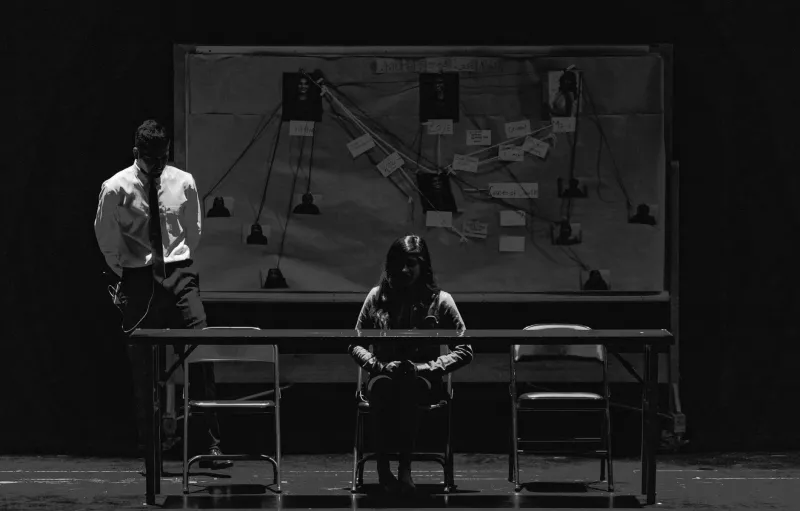
Bryan Singer's The Usual Suspects (1995) is probably the most studied example of the weaponized flashback in American cinema, and it still holds up as a masterclass in controlled deception. The entire film is built around Verbal Kint's testimony — a story he's constructing in real time, improvised from objects scattered around a police interview room. The flashbacks we see aren't memory. They're fiction being assembled on the fly.
What makes Singer's execution so slippery is that the visual language of Kint's fabricated scenes is identical to the film's objective reality scenes. There's no soft focus, no color grade shift, no audio warping to signal subjectivity. The fake past looks exactly like the real present. That's not an accident — it's the whole point. The film is betting that you'll apply the same rules to every flashback, and by the time you realize those rules don't apply, Keyser Söze is already gone.
Lighting the Lie: Visual Grammar as Misdirection
Not every director buries their manipulation as deep as Singer does. Some use visual grammar to technically signal subjectivity while counting on audiences not to consciously register it.
Take Gone Girl (2014). David Fincher shoots Amy's diary flashbacks in warm, golden tones — the visual shorthand for nostalgia and authenticity. It's a romanticized palette that codes as genuine memory, the kind of footage you'd expect from a happy couple's internal highlight reel. Fincher is doing something sneaky here: he's using the conventions of the reliable flashback to make an unreliable one feel earned. The warmth isn't accidental. It's a costume.
When the third act reveals that Amy fabricated the diary entries entirely, those beautiful golden flashbacks recontextualize as something far colder. Fincher didn't cheat — technically, he showed you Amy's constructed version of events, and the visual warmth was her aesthetic choice, not the film's objective eye. But the audience doesn't experience it that way in the moment. You feel tricked because you were meant to.
Sound Design as a Co-Conspirator
Visual deception rarely works alone. The audio layer is where a lot of the emotional manipulation actually lives.
In Shutter Island (2010), Scorsese uses sound design to blur the line between Teddy Daniels' genuine memories and his constructed delusions. The score during flashback sequences is deliberately dissonant — not quite wrong enough to register as a warning signal, but unsettled enough to create ambient unease that audiences tend to attribute to grief rather than unreliability. The film trains you to read the sonic discomfort as emotional weight. It's only on a rewatch that the same cues start to sound like alarms.
This is the audio equivalent of the false warm palette. Use a register that means something else in normal cinematic vocabulary, then repurpose it to mask the deception.
When the Camera Itself Testifies Falsely
Perhaps the most aggressive version of the unreliable flashback is the one where the film doesn't just show you a character's distorted memory — it presents a fully fabricated event from an apparently omniscient camera angle. No character POV, no internal monologue framing. Just the camera, bearing witness to something that didn't happen.
Stage Fright (1950) is an early Hitchcock example that actually caused controversy at the time — audiences felt genuinely cheated when a flashback shown with full cinematic authority turned out to be a lie. Hitchcock defended it as a logical extension of the medium's capacity for deception, but the backlash was real enough that the technique largely disappeared for decades.
It came roaring back in the late '90s and hasn't left since. Atonement (2007) uses a similar device, showing Robbie's alleged crime from a perspective that later proves to be Briony's misinterpretation — not memory, but misread perception dressed up as fact.
Why We Keep Falling For It
The unreliable flashback works because it exploits something fundamental about how we process narrative. In real life, the past is fixed. What happened, happened. Cinema borrows that logic and then quietly suspends it — and because the format mimics the finality of actual memory, we don't think to challenge it.
There's also a trust component specific to film grammar. Audiences have spent over a century learning that certain visual conventions mean certain things. A cut to the past means here is what occurred. Warm lighting means this is how it felt. Shaky handheld means this is raw and unmediated. Directors who weaponize the flashback are essentially hacking that learned vocabulary — using the signals of authenticity to smuggle in fiction.
The best of them — Singer, Fincher, Nolan, Scorsese — don't just use the technique for a cheap twist. They build entire films around the epistemological question underneath it: how much of what you think you know did someone else put there?
That's not just a movie question. But it's a particularly good one to ask in a dark room, staring at a screen, trusting everything it shows you.
The Verdict
The flashback started as a convenience — a clean way to deliver backstory without grinding the present narrative to a halt. Somewhere along the line, the smartest filmmakers realized it was something more dangerous: a format that audiences treat as sworn testimony, which means it's also the perfect vehicle for perjury.
Next time the screen goes soft and the timeline rewinds, don't just watch. Investigate. Ask who's narrating this memory, what they stand to gain from it, and whether the camera's apparent objectivity is actually just another layer of the con.
The best movies are the ones that make you feel like a witness — right up until the moment they remind you that witnesses can be wrong.