Ripped from the Headlines, Stripped of the Truth: How Hollywood Keeps Getting True Crime Wrong
Let's be honest with ourselves for a second. The true crime boom didn't start with Netflix. Americans have been obsessed with real-life criminal cases since at least the O.J. Simpson trial, and probably long before that. But somewhere in the last decade, that cultural fascination got turbocharged by streaming platforms hungry for prestige content — and the results have been, to put it charitably, uneven.
Here at Video Detective, our whole deal is looking at media critically and asking hard questions about what's actually on screen. And when it comes to true crime adaptations, there are a lot of hard questions worth asking.
The Problem With Turning Tragedy Into Content
When a production company options the rights to a real criminal case, they're not just acquiring a story — they're acquiring someone's worst moment. Victims' families, wrongly accused individuals, and communities still processing trauma suddenly find their pain repackaged as entertainment, complete with dramatic music and a prestige cast.
The ethical issues here aren't subtle. Dramatization inherently requires creative decisions: which scenes to show, which details to compress, which characters to make sympathetic. Every one of those decisions shapes how millions of viewers will perceive real people who never consented to being characters in someone else's narrative.
And yet the genre keeps growing, the budgets keep climbing, and the Emmy nominations keep rolling in. So what's going wrong — and why does it keep happening?
Where the Wheels Come Off
Take Dahmer – Monster: The Jeffrey Dahmer Story, Ryan Murphy's 2022 Netflix series. By pure metrics, it was a massive success — one of the most-watched English-language series in Netflix history. But the response from victims' families was unambiguous and damning. Rita Isbell, whose brother was one of Dahmer's victims, wrote publicly about watching her own victim impact statement recreated on screen without anyone from Netflix reaching out to her beforehand. She described it as retraumatizing.
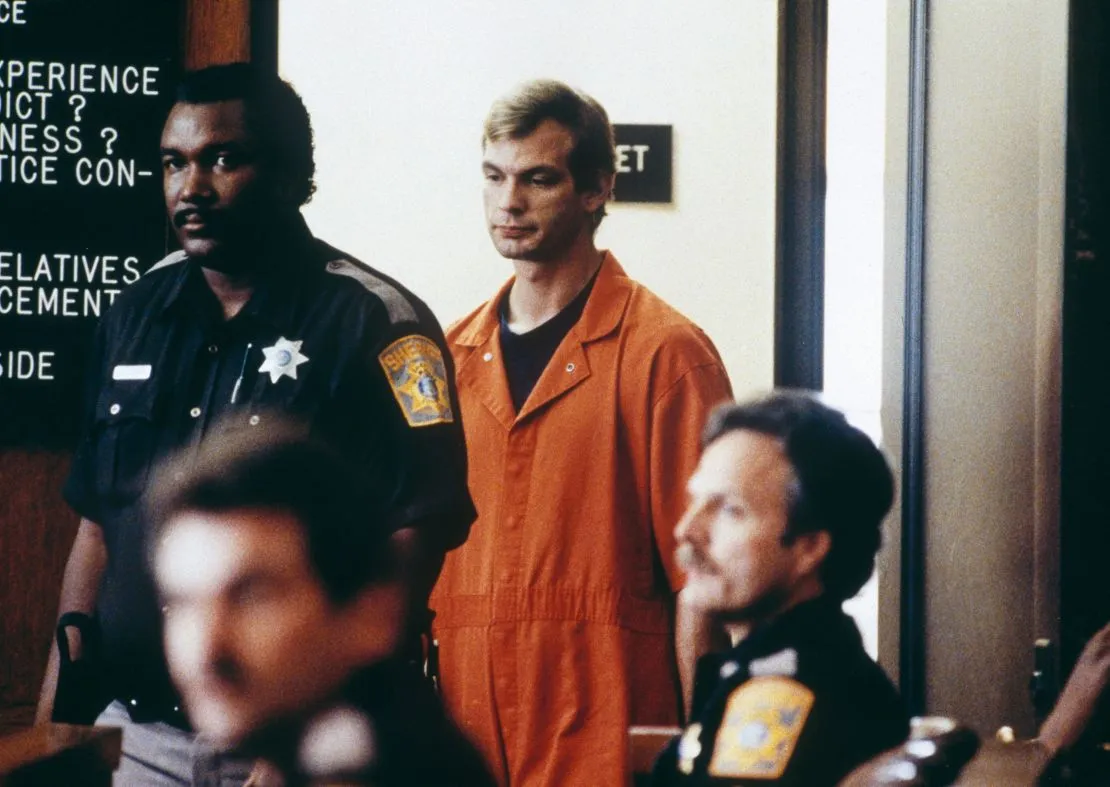 Photo: Jeffrey Dahmer, via media.cnn.com
That's not a minor oversight. That's a fundamental failure of basic human decency, dressed up in high production values.
The series also faced criticism for its framing choices — extended, almost voyeuristic recreations of Dahmer's crimes that critics argued tilted uncomfortably toward the perspective of the perpetrator. When a production spends more time humanizing a serial killer than it does honoring his victims, something has gone wrong at the conceptual level, regardless of how good the lead performance is.
Similar issues plagued The Act, Hulu's 2019 dramatization of the Gypsy Rose Blanchard case. The show was genuinely well-acted and did engage seriously with the complexities of medical abuse. But it also leaned heavily on the grotesque details of the case in ways that felt more sensational than illuminating. The line between examining something difficult and exploiting it for shock value is real — and not every production bothers to find it.
The Composite Character Problem
One of the most persistent issues in true crime dramatization is the invention or merging of characters for narrative convenience. When a real investigation involved dozens of detectives, a screenplay might compress them into one composite figure — which sounds reasonable until that fictional composite is shown doing things no real individual actually did.
This was a central criticism of American Crime Story: The People v. O.J. Simpson, which was otherwise one of the stronger entries in the genre. Certain characters were given motivations and behaviors that their real-life counterparts disputed publicly. When you're making a show about one of the most documented legal cases in American history, factual accuracy isn't a bonus — it's a baseline obligation.
The FX series did a lot right, though, which brings us to the other side of this conversation.
The Productions That Actually Earned It
Not everyone gets this wrong. Some productions approach real criminal cases with the kind of rigor, sensitivity, and self-awareness that the subject matter demands.
The Jinx: The Life and Deaths of Robert Durst (HBO, 2015) remains one of the gold standards of true crime documentary filmmaking. Director Andrew Jarecki spent years building a relationship with Durst, allowing the subject to reveal himself rather than constructing a narrative around him. The result was journalism as much as filmmaking — and it had real-world consequences, contributing to Durst's eventual arrest. That's a production that understood the difference between telling a story and uncovering the truth.
 Photo: Robert Durst, via images.squarespace-cdn.com
When They See Us (Netflix, 2019), Ava DuVernay's miniseries about the Central Park Five, is another model worth studying. DuVernay worked directly with the five men whose lives were devastated by a wrongful conviction, centering their experiences and their humanity throughout. The series is unflinching about the failures of the justice system without ever reducing its subjects to symbols or props. It's advocacy filmmaking, but it's honest about that — and it did tangible good in the world by bringing renewed attention to a case that demanded it.
 Photo: Central Park Five, via static.pornhat.com
What separates these productions from the problematic ones? A few things stand out: direct engagement with the people affected, a clear editorial purpose beyond entertainment, and a willingness to subordinate dramatic convention to factual responsibility.
The Streaming Incentive Problem
It would be naive to discuss this issue without acknowledging the business context. Streaming platforms are in a perpetual arms race for attention, and true crime content — with its built-in audience and inherent dramatic tension — is catnip for acquisition executives. The incentive structure actively rewards sensationalism. A show that is talked about because it's shocking generates more subscriptions than a show that is talked about because it's careful.
Until that equation changes, the industry will keep producing content that prioritizes the story over the people inside it. That's not cynicism — that's just reading the evidence.
The Verdict
Hollywood's relationship with true crime is, at its worst, a machine that converts human suffering into quarterly revenue. At its best, it's a powerful tool for accountability journalism, for amplifying voices that were silenced by the justice system, and for forcing a mass audience to reckon with uncomfortable truths about American institutions.
The difference between those two outcomes isn't talent or budget. It's intention — and the willingness to ask, before a single frame is shot, whether the people at the center of this story have been treated as human beings rather than source material.
We'll keep watching. And we'll keep calling it like we see it.