Body Double Bluff: How Action Sequences Became Hollywood's Favorite Plot Twist Hiding Spot
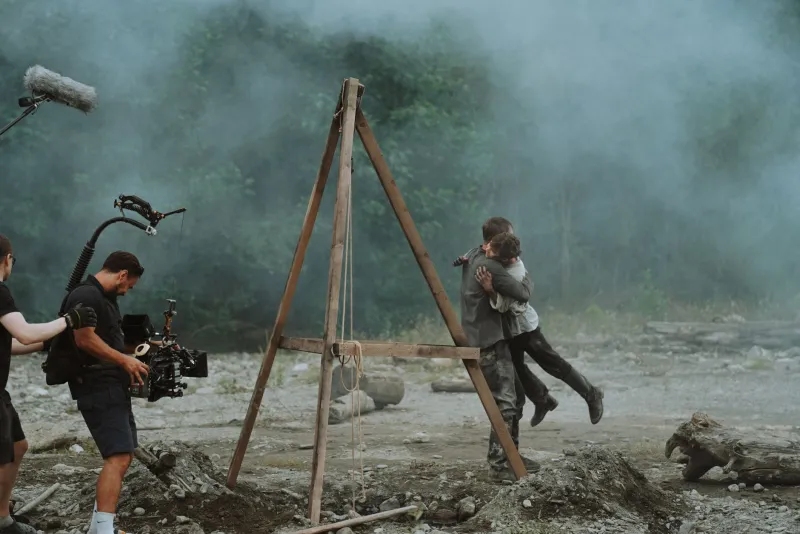
Here's a question worth asking the next time an action sequence kicks into high gear: who exactly are you watching? The answer, more often than not, is deliberately unclear — and that's not an accident. Across decades of blockbuster filmmaking, the stunt double has quietly evolved from a behind-the-scenes necessity into one of the most reliable tools in a director's misdirection playbook.
We talk a lot about visual storytelling. We talk about lighting, framing, color grading. But we don't talk nearly enough about the moment a character pulls on a motorcycle helmet, ducks behind a pillar, or gets swallowed by a crowd — and the camera suddenly finds a very convenient reason to stay wide or cut fast. That's not just stunt choreography. That's narrative engineering.
The Anatomy of a Convenient Obscurement
The mechanics here are pretty simple once you know what to look for. Action cinema has always needed stunt performers to execute the dangerous stuff safely. But the side effect of that practical necessity is that faces disappear. Masks go on. Bodies move differently. Camera operators pull back to capture the full physical geography of a stunt, which means close-up facial confirmation becomes impossible.
Smart filmmakers figured out a long time ago that this natural obscurement is a gift. If you need audiences to believe a character is alive when they're not — or dead when they're not — an action sequence is the perfect alibi. You don't have to lie outright. You just have to let the chaos do the lying for you.
Think about how many times you've watched a protagonist seemingly defeat a villain in a brutal fight, only for that villain to resurface later. The reappearance lands as a shock, but go back and watch the sequence that supposedly ended them. Odds are the camera cut away just before confirmation. Odds are the final blow happened just out of frame, or the body dropped into shadow, or the stunt performer's build was just different enough that something felt slightly off but you couldn't name it.
When Stunt Casting Becomes an Accidental Spoiler
This is where things get genuinely interesting from an investigative standpoint — because the strategy can backfire. There's a long history of eagle-eyed viewers noticing that a stunt performer's physique, movement patterns, or even their hands don't match the actor they're supposedly doubling for. And when that mismatch is spotted, the game is up.
The Mission: Impossible franchise has dealt with this for years. The series traffics heavily in disguise and identity confusion as a core narrative device, which means the line between an intentional misdirection and an accidental reveal is razor thin. Fans have repeatedly identified stunt performers in key sequences and used those identifications to deduce plot information before release. The production teams have gotten more sophisticated in response — shooting tighter, using more aggressive editing rhythms, and sometimes digitally compositing actor faces onto stunt footage specifically to close those loopholes.
Marvel's output offers another rich case study. The MCU depends heavily on the survival or death of specific characters to fuel its ongoing narrative engine. When a major character gets buried in an action sequence, production goes to significant lengths to obscure whether the actor themselves is in the frame. The result is action choreography that sometimes feels oddly evasive — designed less to showcase the physicality of the scene and more to prevent you from confirming who's actually in it.
The Weaponized Action Sequence
The more sophisticated version of this trick isn't just about hiding information — it's about actively feeding you false information through the action itself. Directors have figured out that if you can make an audience feel like they've confirmed something, they'll stop questioning it. The action sequence becomes a false witness.
Consider the narrative function of a scene where two characters are fighting in low light, intercut rapidly, with a score pushing urgency. You process the scene as confirmation of what you're seeing. But what you're actually doing is assembling a conclusion from incomplete evidence — which is exactly what the film wants you to do. The edit is leading you to a verdict the footage doesn't actually support.
This technique shows up constantly in heist films, where the question of who's actually executing which part of the plan is intentionally muddied by the kinetic energy of the sequence. It shows up in spy thrillers, where costume and physicality are already thematically slippery. And it shows up in superhero cinema, where masks and suits make the whole enterprise of facial confirmation basically impossible.
Training Your Eye to See the Swap
So how do you catch it? A few signals are worth watching for.
First, pay attention to when a film stops showing you a character's face during action. If a character who's been shot in close-up throughout a film suddenly becomes a distant figure during a pivotal sequence, that's a flag. Second, watch the hands. Stunt doubles' hands are often the hardest thing to match convincingly, and filmmakers sometimes slip up there. Third, listen to the edit rhythm. When a sequence cuts faster than it needs to, that speed is often covering something rather than building tension.
Finally, and maybe most importantly, ask yourself what the film needs you to believe at the end of that sequence. Whatever conclusion you've been guided toward is the one most worth interrogating. The action sequence, like any good witness, is telling you exactly what it was coached to say.
The stunt double isn't just keeping actors safe anymore. They're keeping secrets. And the next time the camera loses a face in the middle of a fight, that's worth treating less like a production limitation and more like a confession.