Background Check: The Hidden Language of Extras and Minor Characters in Prestige TV
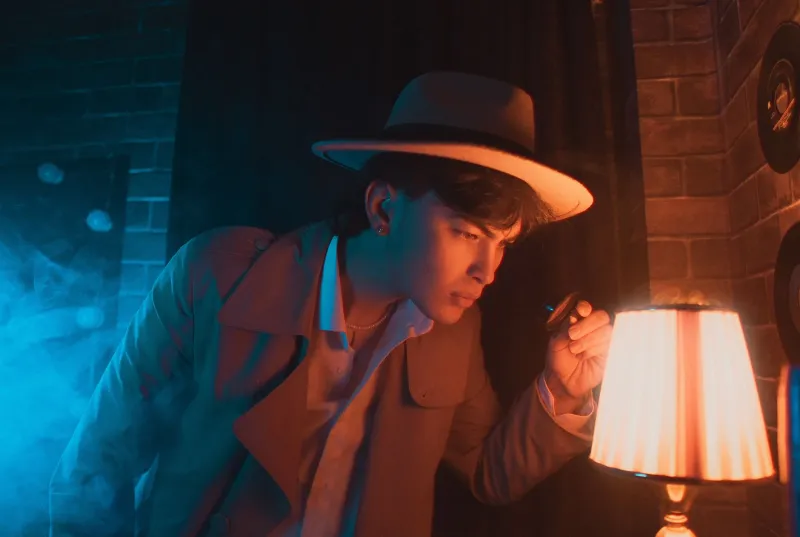
Every seasoned detective knows the first rule of working a scene: don't just look at who's talking. Look at who's standing in the corner.
Prestige television has quietly developed a second storytelling layer that operates entirely beneath audience radar — one written not in dialogue or dramatic close-ups, but in the placement of a background actor, the color of a costume, or the deliberate reappearance of a face that was never supposed to matter. We've been watching the wrong people.
Here at Video Detective, we decided to treat this like what it is: an open case. We rewound the footage, logged the timestamps, and built individual case files on some of the most deliberate background-level storytelling in recent prestige TV history. What we found suggests that certain showrunners aren't just using extras to fill space — they're using them as a coded communication channel with the audience's subconscious.
Case File #1 — Breaking Bad, Season 4: The Pink Teddy Bear Witness
Evidence Logged: Season 4, Episode 1 — Box Cutter (original air date: July 17, 2011)
Most viewers were already familiar with the pink teddy bear motif by the time Season 4 opened — the eyeball had been haunting Walt's bathroom since Season 2. But rewatch the background of the superlab's early scenes and something else emerges. A maintenance worker in a pink-tinted jumpsuit appears in the background of three consecutive lab sequences across Episodes 1, 3, and 5. He never speaks. He's never credited. But his presence consistently precedes scenes in which Gus Fring asserts dominance over Walt.
Vince Gilligan's writers' room has spoken publicly about using color as a psychological cue — blue for meth, green for money, red for danger. The pink jumpsuit, in this reading, isn't accidental wardrobe. It's a recurring visual whisper: the specter of consequence is always in the room. The character is a walking reminder of the plane crash fallout, positioned deliberately to frame Gus as the next catastrophic force in Walt's trajectory.
Verdict on intent: Deliberate seeding, high confidence.
Case File #2 — Succession, Season 3: The Staffer Who Knew First
Evidence Logged: Season 3, Episode 7 — Too Much Birthday (original air date: November 14, 2021)
The Roy family's chaos tends to consume every frame it's in — which is exactly why most viewers missed a specific background detail during the episode's chaotic birthday party sequence. A Waystar Royco mid-level staffer, visible in four separate background shots across the episode, shifts physical position in a way that tracks almost exactly with Gerri's emotional arc. When Gerri is being publicly humiliated by Roman, this background figure turns away from the action. When she reasserts authority in a later scene, the same figure is positioned facing her directly.
This isn't a named character. She has no dialogue. But the blocking — almost certainly choreographed by director Cathy Yan's team — creates a background Greek chorus effect. The staffer becomes a proxy for the audience's shifting sympathies, a shadow reader of the room. Given that Succession was known for its meticulous rehearsals and Jesse Armstrong's obsessive control over set dynamics, writing this off as coincidence takes more work than accepting it as craft.
Verdict on intent: Circumstantial but compelling. Case remains open.
Case File #3 — The Wire, Season 3: The Corner Boy Who Telegraphed Stringer Bell
Evidence Logged: Season 3, Episodes 4 through 8 (2004)
David Simon's Baltimore opus is perhaps the gold standard of background-level storytelling in American television. The show famously treated its extras as full citizens of a living city, not furniture. But Season 3 contains a specific instance that crosses from atmospheric detail into apparent foreshadowing.
A young corner boy — uncredited, appearing in background shots across five mid-season episodes — is consistently costumed in business-casual attire that mirrors Stringer Bell's evolving aesthetic as he attempts to go legitimate. As Stringer's arc darkens toward its conclusion, the corner boy's wardrobe in background shots gradually reverts to street-level gear. By Episode 11, the week before Stringer's death, the character appears in a single background frame wearing the same color jacket as Stringer's funeral attire.
Is this a production coincidence? Maybe. But Simon has said in multiple interviews that The Wire's background population was treated as a continuous narrative. Costume department head Alonzo Wilson was reportedly given character continuity notes for background players. The corner boy, in this light, reads as a visual echo — Stringer's fate reflected in someone the audience never thought to follow.
Verdict on intent: Strong circumstantial case. Recommend further investigation.
Why Showrunners Do This — And Why It Works
The psychology here is actually pretty well understood in filmmaking circles, even if TV audiences rarely discuss it in these terms. It's called environmental storytelling — the practice of embedding narrative information in the world around the main characters rather than in the characters themselves.
What makes prestige TV particularly fertile ground for this technique is runtime. A film has two hours. A multi-season drama has dozens of hours to plant, water, and eventually harvest background-level details. Showrunners know that a certain percentage of their audience will rewatch. They know that social media clip culture will freeze-frame their sets. The background is no longer invisible — it's a slow-burn bonus track for the attentive viewer.
There's also a practical creative incentive. Writers' rooms use visual seeding to maintain internal consistency without tipping their hand in dialogue. If the script says "Stringer Bell is going to die this season" — that's a leak risk. If the costume department quietly mirrors his color palette in a background character's wardrobe across five episodes — that's a buried clue that only pays off on rewatch.
What This Means for How You Watch TV
The honest takeaway here isn't that every extra is secretly a prophet. Background actors are often doing exactly what they're paid to do — fill space convincingly. But in the hands of a showrunner who treats every frame as intentional, the background becomes a second screenplay.
Next time you're deep into a prestige drama — The Bear, Severance, Yellowjackets — try splitting your attention. Let the dialogue wash over you and actually watch the edges of the frame. Who keeps appearing? What are they wearing? Where are they positioned relative to the characters whose fate is about to change?
You might be surprised how much of the case was solved before the season finale. The evidence was always in the room. We just weren't looking at the right suspects.